


Introduction
Building a successful WordPress website requires more than just installing a theme and adding content. A well-structured development process ensures that the website is visually appealing, user-friendly, secure, and optimized for performance.
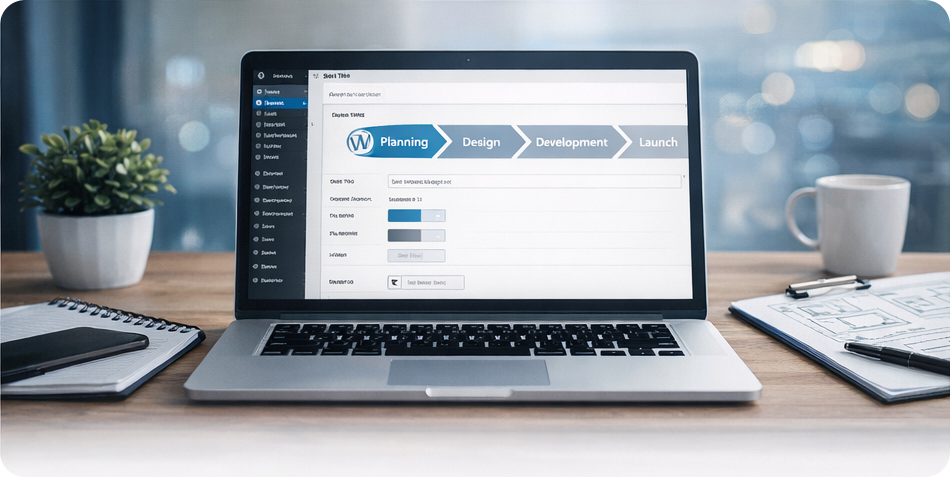
In this article, I’ll walk through my WordPress website development process—from the initial planning stage to launching a fully optimized website.
Planning and Research
Every website project begins with careful planning. This stage focuses on understanding the purpose of the website, the target audience, and the key features required.
During the planning phase, I typically:
- Identify the website’s goals and objectives
- Review the brand guidelines and design preferences
- Plan the website structure and page hierarchy
- Determine required functionality such as contact forms, booking systems, or eCommerce features
A clear plan helps ensure that the project stays organized and aligned with the client’s goals.
Design and Layout
Once the structure is defined, the next step is designing the website layout. The goal is to create a clean and user-friendly interface that reflects the brand while providing a smooth browsing experience.
At this stage, I focus on:
- Creating clear page layouts and content structure
- Maintaining consistent branding across pages
- Ensuring responsive design for mobile and tablet devices
- Designing intuitive navigation for better user experience
A well-designed layout helps visitors quickly find the information they need.
WordPress Development
After finalizing the design, the development phase begins. This is where the website is built using WordPress and necessary tools.
My development process typically includes:
- Setting up the WordPress environment
- Installing and configuring themes and plugins
- Building pages using tools such as Elementor
- Implementing essential functionality and integrations
- Optimizing the website structure for scalability
At this stage, I also ensure the website remains easy to manage for future updates.
Performance Optimization
Website performance is a critical factor in both user experience and search engine rankings. Before launching a site, I perform several optimization steps.
These include:
- Compressing and optimizing images
- Reducing unnecessary plugins
- Implementing caching solutions
- Optimizing CSS and JavaScript files
- Improving page load speed
A fast-loading website improves engagement and helps retain visitors.
Testing and Quality Assurance
Before launch, the website goes through a full testing process to ensure everything works correctly.
This stage includes:
- Checking responsiveness across different devices
- Testing forms and interactive features
- Reviewing browser compatibility
- Fixing layout or functionality issues
- Ensuring links and navigation work properly
Thorough testing helps deliver a reliable and professional website.
Launch and Ongoing Maintenance
Once everything has been tested and approved, the website is ready to go live. After launch, ongoing maintenance helps keep the website secure and up to date.
Maintenance tasks may include:
- Updating WordPress core, themes, and plugins
- Monitoring website performance
- Performing security checks
- Backing up the website regularly
Regular maintenance ensures the website continues to perform well over time.
Final Thoughts
Developing a WordPress website involves careful planning, thoughtful design, and proper optimization. By following a structured process, it’s possible to build websites that are not only visually appealing but also fast, secure, and easy to manage.
Whether it’s a business website, portfolio, or blog, a strong development process ensures that the final product delivers a reliable and seamless experience for users.